

Fabryka Haftu, Ełk · Orders for brigades, battalions and training groups
Custom patches for Poland's Territorial Defence Forces
Consistent insignia and clearly organised batches matter when successive training groups need equipment. We make embroidered patches, unit emblems, name tapes and commemorative designs for WOT requirements using supplied references. Versions, wording lists and packing are agreed, with appearance checked on an embroidered sample. Production takes place in Ełk, while each batch's quantity, materials and timing are confirmed individually.
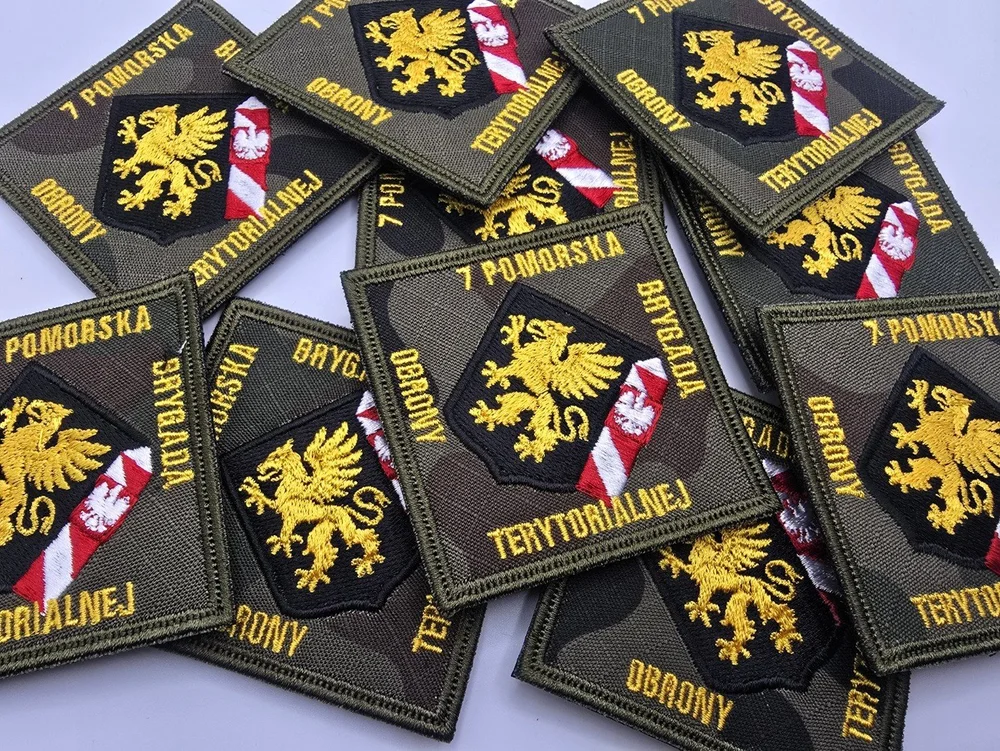
Our own workshop. Real examples of our work.
Contents
For your serviceOrdering processOur workConstruction detailsMaterials & evidenceSample & qualityPrice & lead timeEnquiry checklistFAQBuyer articlesPrepare an enquirySources & videosB2B / Territorial Defence
Consistency across initial orders and later replenishment
An order for a brigade, battalion or training group may combine one shared emblem with many individual names and several product versions. A well-prepared list is especially valuable: it identifies what stays the same, which wording changes and how many pieces each version requires. This makes it easier to approve artwork, plan sampling and check that the delivered batch is complete.
Fabryka Haftu has operated since 2013 and manufactures in Ełk, Poland. We turn artwork into embroidery while considering finished size, fabric, attachment and the clarity of detail. For training-related orders, provide the required arrival date and any expected follow-up requirement early in the discussion. Service insignia follow the supplied documentation, while course and commemorative designs are specified separately. This keeps quotations organised and makes the correct version easier to identify when placing a repeat order. The approved design and a physical sample form a practical reference, allowing the actual embroidery to be assessed before the main production run begins.
01
Brigade and battalion emblems
Unit insignia are prepared from supplied designs, dimensions and production requirements. We agree the field or full-colour version, background fabric and attachment. Where one enquiry covers several subunits, each item receives its own identifier and quantity. This keeps the order clear when different designs are compared, approved and packed for delivery.
02
Batches for successive training groups
A training-related order needs a defined arrival date and a settled list of versions. We can discuss agreed batch divisions and how each should be labelled. A stable base design, approved sample and recorded specification provide a useful starting point for future orders, even when participant numbers or edition wording change.
03
Name tapes and team sets
Personal-name lists are organised into an order with quantities and versions assigned to each entry. Before production, we confirm Polish characters, hyphenated names and the treatment of longer text. Shared fabric, borders and dimensions help create a consistent set. Any grouping by person or subunit is included in the agreed packing arrangements.
04
Exercises, anniversaries and commemorative projects
A dedicated patch can mark an exercise, the completion of training or an anniversary. We help arrange the name, symbol and date so they remain readable in embroidery. Its intended commemorative use is specified separately from service insignia. Later editions can retain the character of the composition while updating only the agreed details.
01 / HOW TO ORDER
From an initial sketch to a finished batch
We start with the purpose of the insignia and your purchasing requirements. Vector artwork is useful, but a clear sketch or photograph can also be a starting point. Before production, we agree the scope of artwork preparation and the approval procedure.
Enquiry and specification
Send the design, finished dimensions, quantity and backing. For official insignia, include the relevant approved pattern or unit documentation. Tell us your required delivery date.
Quotation and agreement
We establish the construction and order scope. Price, minimum quantity, payment, schedule and sampling arrangements are confirmed in the quotation.
Embroidery artwork
The graphic is developed into a stitch sequence. We review lettering, spacing, backing and colours. Small details may require agreed simplification to remain legible.
Test embroidery
A stitch-out shows the design on real fabric. How the sample is presented and approved is agreed for each order; photographs, visualisations and physical samples serve different purposes.
Production and finishing
The batch is made after the agreed version has been approved. Cutting, edge finish and fastening are selected for the patch shape and its intended use.
Inspection and delivery
We check the work against the agreed design. A breakdown by variant and quantity helps with acceptance. Orders can be shipped or prepared for collection in Ełk.
03 / FROM OUR WORKSHOP
Real embroidery. Details you can see.
Selected work by Fabryka Haftu. Look at the lettering, fill texture, finished outline and the differences between subdued and full-colour versions.
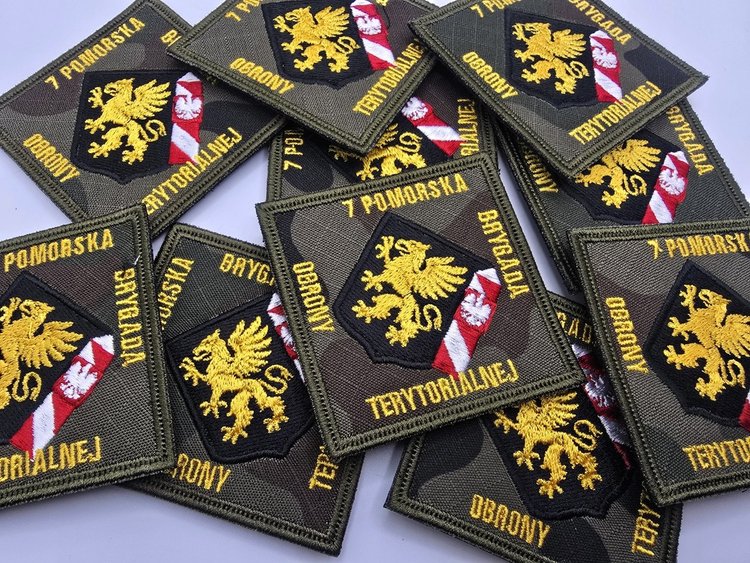
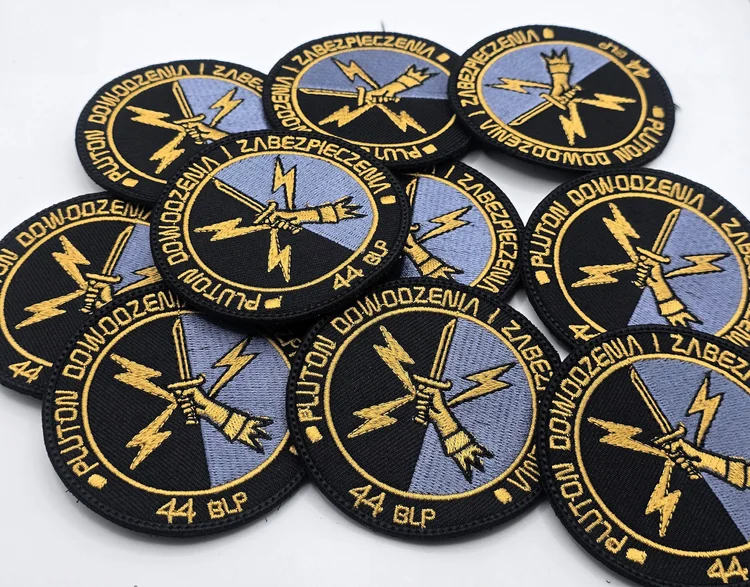
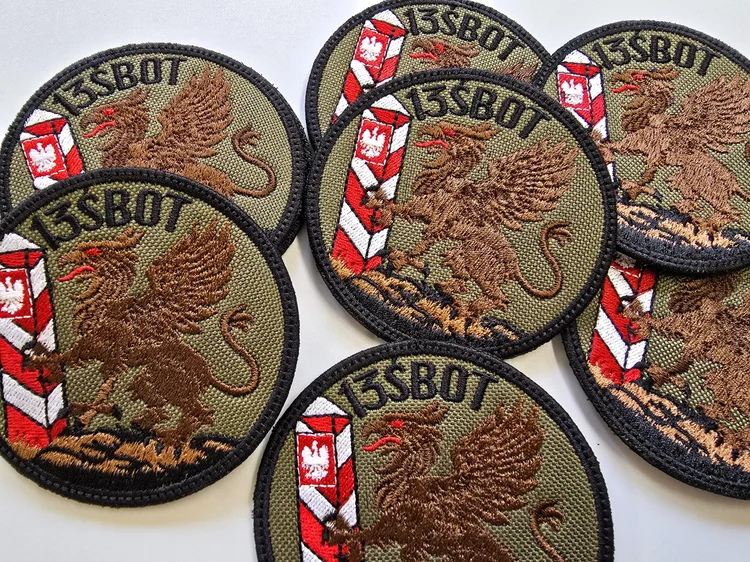
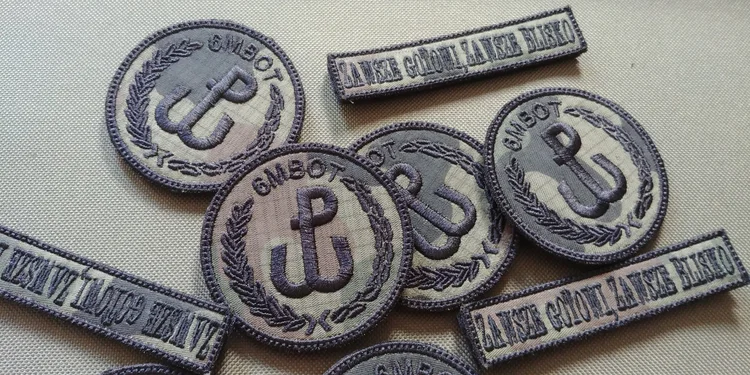
These photographs show examples of workmanship. The design, fabric and fastening for a new order are agreed separately; displaying an emblem does not imply official endorsement by its user.
More examples for this service →
Our own production footage · no music
Inside our workshop in Ełk
Our own footage shows machine embroidery, the movement of the needles and designs taking shape across a batch. Each patch still needs finishing and inspection. The complete process determines the final result.
Explore the production process →The film shows NATO patch production.
04 / CONSTRUCTION AND DETAIL
Define the design, versions and packing before production
A useful specification distinguishes fixed features from variable information. Dimensions, shape, fabric, border colour and attachment may remain fixed, while names, group identifiers or event dates change. Each version should have its own name or identifier and quantity. This is particularly useful when similar-looking products are intended for several teams within one combined order.
Vector artwork or a drawing is translated into an embroidery programme for the actual finished size. Small text, complex symbols and narrow gaps are assessed during preparation, with any technical adjustments agreed before proceeding. Field and full-colour versions may require different threads and fabrics. On camouflage cloth, the position of printed shapes depends on where each piece is cut, so the camouflage pattern and the placement of the embroidery are assessed as separate aspects.
Hook-and-loop or sew-on attachment is specified alongside the edge finish. Merrow edging is one option, selected where the shape is suitable. The sample is used to inspect dimensions, readability, colour and border proportions. Requirements concerning composition, colour fastness, abrasion resistance or other properties should be stated before quotation; we confirm available documentation for the selected components. Repeat orders include a fresh check of material availability and a comparison with the previously agreed specification.
A new group, a consistent production reference
The first batch establishes a useful reference: the approved emblem, name-tape format, attachment and packing method. For the next group, every detail does not need to be decided again. We can return to the recorded specification, check material availability and focus on the updated list and quantities. If a new version is introduced, its differences are defined before embroidery starts. The purchaser can then see what remains common and what needs further approval. This approach supports the consistent appearance of successive sets and makes replenishment easier to organise without losing the details of the original design.
05 / FABRIC, THREAD, BACKING
Materials and evidence: what should be agreed?
Fabric, thread and fastening form one system. A camouflage name or thread brand alone does not specify the performance of the finished patch. If tests or documents are required, include a precise list with your enquiry.
| Component | Specify in your enquiry | Check at approval |
|---|---|---|
| Base fabric | Type, colour or camouflage pattern, intended garment and a fabric reference where needed. | The background appearance and agreed variant. The arrangement of camouflage shapes can differ between pieces. |
| Thread | Colour, sheen and any special requirements. We use polyester threads including Isacord in our standard work. | Legibility and contrast on the intended base. Care requirements apply to the complete combination of materials. |
| Fastening | Hook backing, a hook-and-loop set, or a sew-on patch. | Backing size and position, compatibility with the garment panel and the agreed finish. |
| Edge | An embroidered border or merrow overlock, depending on shape and construction. | A consistent outline, finished dimensions and sufficient spacing between lettering and the edge. |
| Documentation | The exact document or test method, required scope and when it must be provided. | Whether the evidence covers the specified component, batch or finished product. Availability is confirmed in the quotation. |
A thread or fabric certificate does not automatically certify the finished patch. Abrasion resistance, colourfastness, flame resistance and infrared properties must be specified and verified separately. A general claim of compliance is not a substitute for documentation.
06 / APPROVAL
Three things to assess on a sample
Legibility
Read the text at its actual size. Check spacing, diacritics and whether the main symbol is recognisable.
Consistency
Compare the sample with the approved version, dimensions, colour scheme and base fabric. Include the appearance of the background beneath the embroidery.
Finishing
Check the shape, border, reverse and fastening. Record any corrections before approving the batch.
Four parts of one order
- Embroidered design — lettering, symbols and thread colours.
- Base fabric — visible background or support beneath the fill.
- Stabilisation — chosen for the fabric and design.
- Fastening — hook-and-loop or a sew-on version.
Illustration of component roles, not an exact cross-section of every patch.
07 / ORDER PLANNING
What affects price and production time?
Two patches measuring 8 cm in diameter can involve very different amounts of work. Embroidery coverage, colour changes, small lettering, borders, fabric and fastening all matter. Preparing a stitch program for a new design is a separate stage.
Compare quotations for the same construction, quantity per variant and sampling scope. A batch of one emblem is not equivalent to numerous short runs of different designs. Ask how changes requested after approval are handled and priced.
Timing depends on documentation, material availability, the production schedule and timely approval. Tell us the delivery date you need and whether the order might be split into batches. We confirm a realistic schedule after reviewing the order.
08 / PREPARE YOUR BRIEF
Your service-specific enquiry checklist
Collect the information below, then use the enquiry builder to prepare an email. You do not need finished artwork to start a conversation — describe your idea and attach the material you have.
- Correct design and documentation for the brigade, battalion or subunit insignia.
- Separate field, full-colour, course and commemorative versions.
- Quantity table with name tapes assigned to the correct people or groups.
- Dimensions, fabric, thread colours, border and attachment.
- Required arrival date before training and any anticipated replenishment.
- Sample approval process, packing arrangements and material documentation needs.
FAQ
Questions before placing an order
How should we prepare an order covering several WOT subunits?
Send a table listing each version, its design, dimensions, attachment and quantity. Assign name-tape lists to the correct groups. Tell us whether items should be packed together, separately by subunit or as personal sets. Organised information supports an accurate quotation and reduces the risk of similar items being mixed during order preparation.
Can batches be planned around successive training dates?
We can discuss a schedule based on expected quantities and required arrival dates. Each batch still needs confirmation of its design, materials and production availability. Define which parts of the design stay unchanged and which will be updated. An initial discussion does not automatically reserve production time; the specific scope is recorded in the order agreement.
Is an embroidered sample available before the main batch?
Sampling allows the actual stitched result to be assessed rather than relying only on a visual. Its scope and approval method are agreed within the order. For multiple versions, we identify which differences need separate checks. Confirmation of size, colour, wording and attachment establishes a shared reference for the batch that follows.
What if some names are confirmed later?
Separate the approved list from the anticipated additions and agree when production data must be finalised. Later names may require a separate batch, with its price and timing confirmed again. An established name-tape format helps maintain consistency, but each new spelling list still needs to be checked and approved before it is used.
What is the minimum order for WOT patches?
Quantity is agreed after reviewing the design and the number of versions. Digitising, embroidery size, materials and finishing all matter. Share the actual requirement for the first batch and any likely replenishment. This allows the discussion to reflect the whole project rather than assuming the same minimum quantity is appropriate for every product.
Can a custom design replace official service insignia?
A commemorative or course design serves a different purpose from insignia defined in service documentation. The order should make clear which product is required and which reference governs it. For service insignia, provide the relevant documentation. Developing an attractive graphic or producing it in embroidery does not itself establish approval for wear on a uniform.
B2B / BUYER RESOURCES
Give your order a solid foundation
Practical articles for people responsible for purchasing insignia, accepting batches and arranging repeat orders.
LET’S START WITH THE DETAILS
Prepare a complete quotation request
Send your artwork or sketch together with the main order specifications. Open a ready-to-complete message in your email application, or copy the template into the email service you use.
What should your enquiry include?
- Your unit or organisation name and the quantity required.
- Finished patch dimensions, shape and fastening.
- Artwork or sketch, colours and material requirements.
- Preferred delivery date and stitch-out approval requirements.
Complete the specifications and attach your artwork before sending. If no email application opens, copy the template below and send it to biuro@fabryka-haftu.pl.
Email template to copy
Hello,
Please provide a quotation for custom Territorial Defence (WOT) patches.

Unit / organisation:
Quantity:
Finished patch dimensions:
Fastening (hook backing / hook-and-loop set / sew-on):
Version / colour scheme:
Preferred delivery date:
Requirements and additional information:

Please confirm the price, minimum quantity, production schedule, stitch-out approval arrangements and available material documentation.
I will attach the artwork or sketch and specification to this email.
Let's discuss your next batch.
Fabryka Haftu in Ełk, Poland · our own workshop since 2013
+48 531 652 826 · +48 531 667 414
ul. Rzemieślnicza 18, 19-300 Ełk
Monday–Friday, 10:00–17:00, Polish local time
Contact form →READ AND VERIFY
Materials, learning and sources
Manufacturer resources explain the techniques. The documentation for your specific order determines the design and performance requirements. Regulatory links lead to source records, where subsequent amendments should be checked.
Manufacturer videos and tutorials
External educational resources are credited to their creators. They illustrate techniques and are not footage of our workshop.