
Fabryka Haftu, Ełk · Production for military units and teams
Custom military patch manufacturer
A military patch needs a clear design, the right appearance on the uniform and a specification everyone can follow. At Fabryka Haftu in Ełk, Poland, we develop embroidered insignia from supplied artwork or a sketch through to a physical sample and an agreed production batch. Materials, backing, quantities, documentation and delivery dates are confirmed for each order.
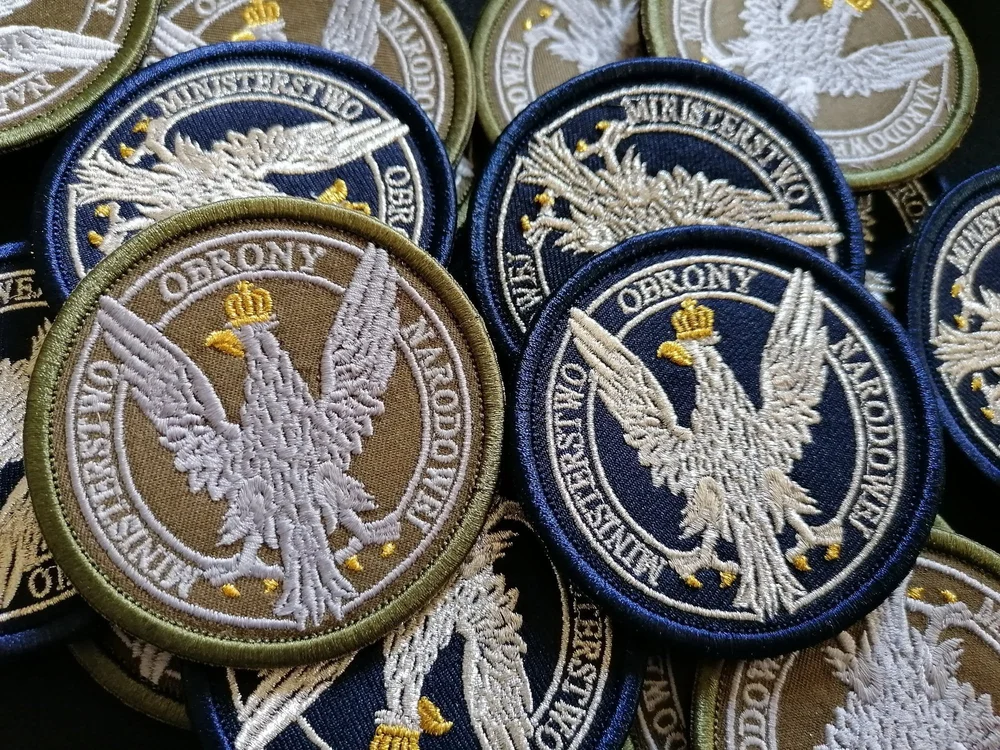
Our own workshop. Real examples of our work.
Contents
For your serviceOrdering processOur workConstruction detailsMaterials & evidenceSample & qualityPrice & lead timeEnquiry checklistFAQBuyer articlesPrepare an enquirySources & videosB2B / Military
One agreed specification. Consistent insignia across the unit.
Ordering for a military unit involves more than choosing an attractive visual. The emblem needs consistent proportions, colours and detail throughout the batch. We start by identifying its purpose: which garment will carry it, which version is required and which approved reference should guide production. Field, full-colour and commemorative versions are specified separately so that important decisions are not left to interpretation.
We manufacture in Ełk and have operated since 2013. Embroidery digitising and a physical sample help turn design decisions into something you can inspect before the main run. The sample shows the actual thread, the readability of lettering and the behaviour of the fabric. For combined orders, we help organise variants, name-tape lists and packing requirements. This gives procurement teams, unit representatives and event coordinators a practical route to an itemised quotation from a custom military patch manufacturer. Official insignia are produced against the documentation supplied and the scope agreed for the order.
01
Unit and subunit emblems
We prepare custom embroidered patches from the supplied design, with field and full-colour versions clearly identified. Dimensions, shape, fabric, thread colours and attachment are agreed together. If different garments require different versions, each becomes a separate specification item. This also helps prevent similar-looking insignia from being mixed when the order is packed.
02
Name tapes and coordinated identifiers
An order containing many names needs an approved list, a consistent format and a clear lettering policy. We agree spelling, special characters, letter height and the treatment of longer names. Fabric, borders and attachment follow the same specification, helping individual name tapes form a coherent set for the whole team.
03
Courses, exercises and unit events
A course or commemorative design can combine the event name, date and a distinctive symbol. We assess how these elements will read at the finished size. If several groups need different wording, listing all versions and quantities at the outset helps us prepare the embroidery programme and evaluate a representative sample before production.
04
Presentation embroidery and commemorative sets
A larger emblem for display, a pennant or a presentation set needs its own technical treatment. Simply enlarging a small patch does not necessarily preserve its character. Stitch layout and edge finishing are developed for the intended format, while wearable insignia and presentation items remain separate lines in the quotation and production specification.
01 / HOW TO ORDER
From an initial sketch to a finished batch
We start with the purpose of the insignia and your purchasing requirements. Vector artwork is useful, but a clear sketch or photograph can also be a starting point. Before production, we agree the scope of artwork preparation and the approval procedure.
Enquiry and specification
Send the design, finished dimensions, quantity and backing. For official insignia, include the relevant approved pattern or unit documentation. Tell us your required delivery date.
Quotation and agreement
We establish the construction and order scope. Price, minimum quantity, payment, schedule and sampling arrangements are confirmed in the quotation.
Embroidery artwork
The graphic is developed into a stitch sequence. We review lettering, spacing, backing and colours. Small details may require agreed simplification to remain legible.
Test embroidery
A stitch-out shows the design on real fabric. How the sample is presented and approved is agreed for each order; photographs, visualisations and physical samples serve different purposes.
Production and finishing
The batch is made after the agreed version has been approved. Cutting, edge finish and fastening are selected for the patch shape and its intended use.
Inspection and delivery
We check the work against the agreed design. A breakdown by variant and quantity helps with acceptance. Orders can be shipped or prepared for collection in Ełk.
03 / FROM OUR WORKSHOP
Real embroidery. Details you can see.
Selected work by Fabryka Haftu. Look at the lettering, fill texture, finished outline and the differences between subdued and full-colour versions.
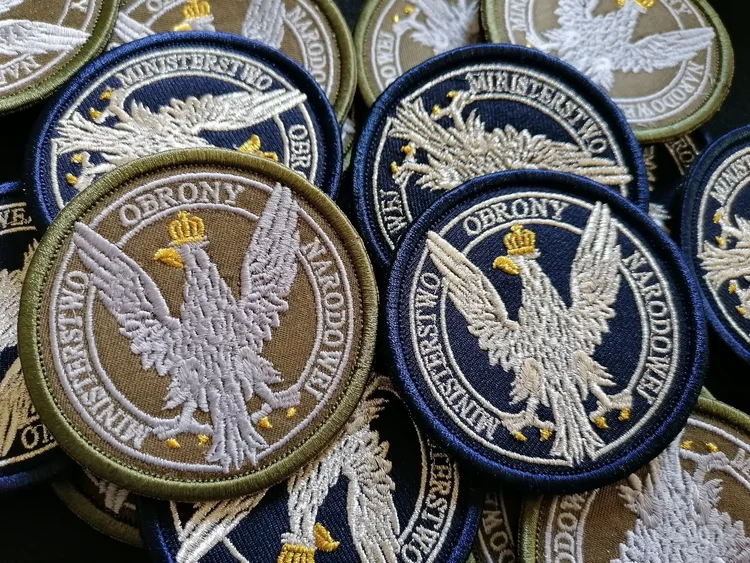
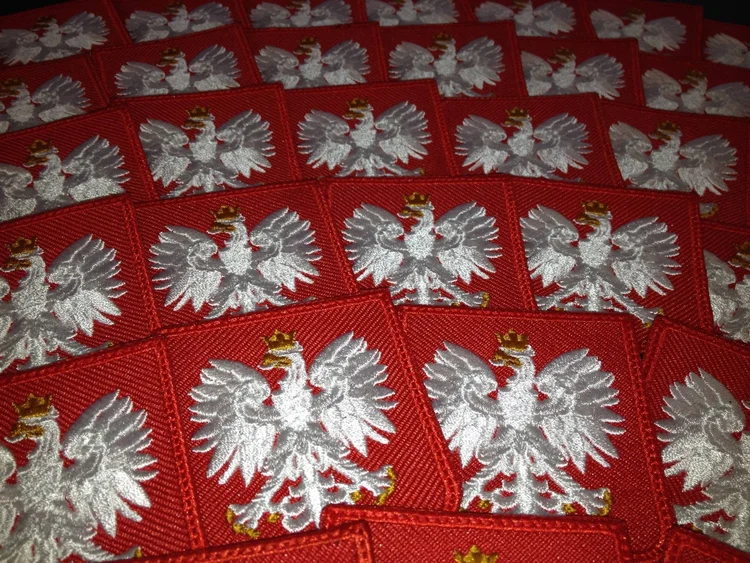
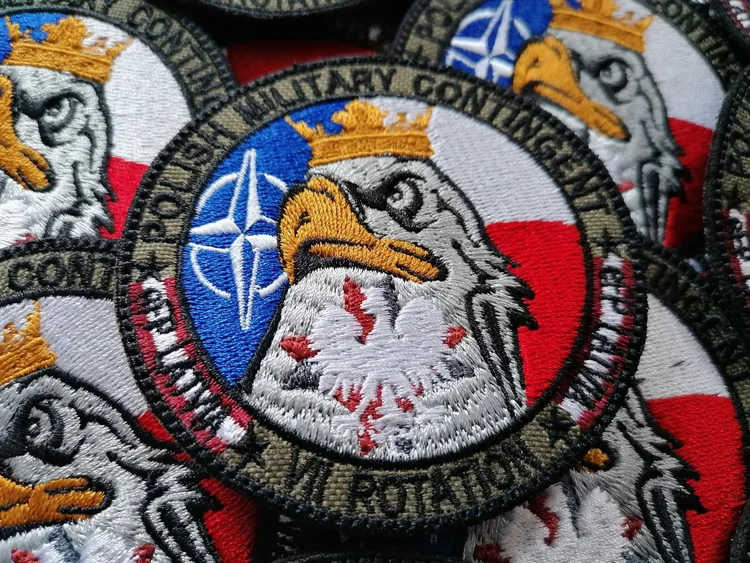
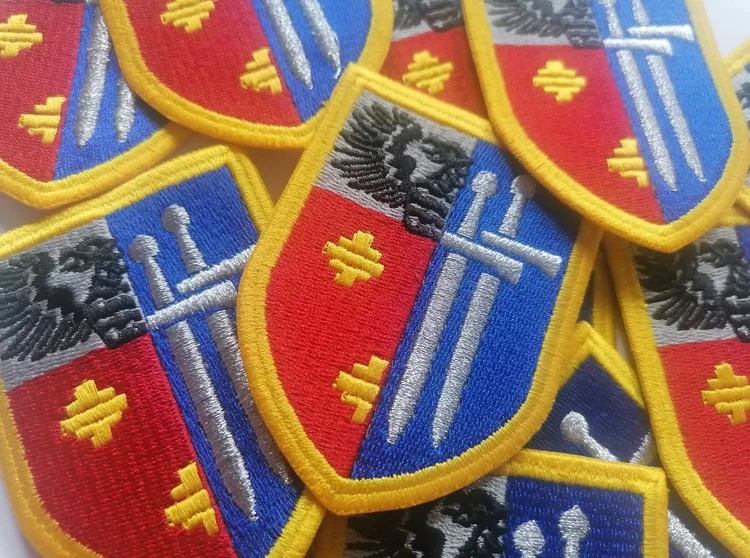
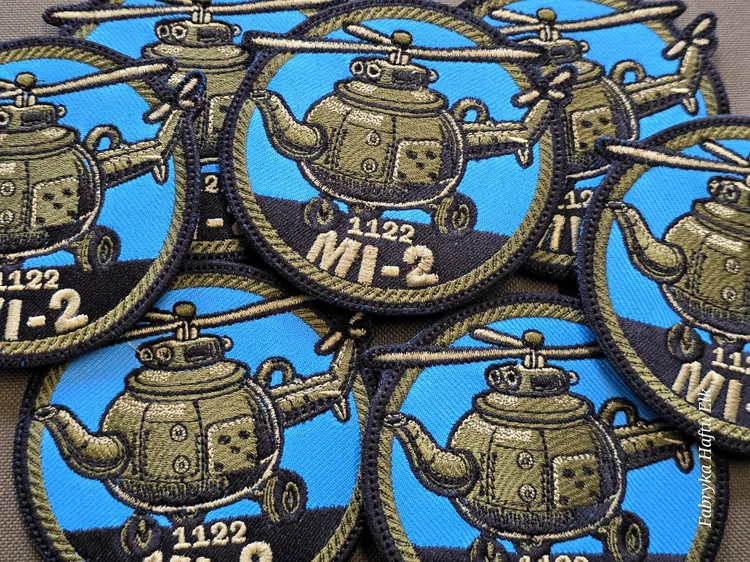

These photographs show examples of workmanship. The design, fabric and fastening for a new order are agreed separately; displaying an emblem does not imply official endorsement by its user.
More examples for this service →
Our own production footage · no music
Inside our workshop in Ełk
Our own footage shows machine embroidery, the movement of the needles and designs taking shape across a batch. Each patch still needs finishing and inspection. The complete process determines the final result.
Explore the production process →The film shows NATO patch production.
04 / CONSTRUCTION AND DETAIL
From approved artwork to an embroidered sample
Send vector artwork, a reference document, a clear drawing or a photograph of the existing insignia. Vector artwork is useful, but it is not an embroidery programme. Stitch directions, colour sequence and the handling of small details must still be planned. If lettering or a fine element needs a technical adjustment, we agree that change before preparing the production version. The wording of an insignia is not changed without approval.
Fabric and thread are selected for the agreed version. Screen colours support the discussion, while a physical sample provides a more useful reference for the finished result. With camouflage fabric, the position of printed shapes will vary between pieces cut from the cloth. Any documents concerning composition, colour fastness, abrasion resistance or other material properties must relate to the actual components selected and the requirements specified for the order.
Attachment can be agreed as hook-and-loop or sew-on, with an appropriate edge finish, including merrow edging where the shape allows it. The sample is used to check dimensions, readability, colours and the border. Once approved, the batch specification also records packing and variant separation. For repeat orders, we return to the approved reference and confirm current material availability before proceeding.
A sample that makes decisions tangible
Consider an order combining a field emblem with name tapes for a subunit. Both designs may look convincing on screen, yet a stitched sample reveals the actual contrast, border width and readability of the longest name. This is the right point to confirm the details. Once approved, the variants and packing instructions can be finalised and the batch produced against a shared reference. The same record supports inspection on arrival and provides a useful starting point for later replenishment. A well-prepared specification turns a collection of design choices into insignia ready for their agreed purpose.
05 / FABRIC, THREAD, BACKING
Materials and evidence: what should be agreed?
Fabric, thread and fastening form one system. A camouflage name or thread brand alone does not specify the performance of the finished patch. If tests or documents are required, include a precise list with your enquiry.
| Component | Specify in your enquiry | Check at approval |
|---|---|---|
| Base fabric | Type, colour or camouflage pattern, intended garment and a fabric reference where needed. | The background appearance and agreed variant. The arrangement of camouflage shapes can differ between pieces. |
| Thread | Colour, sheen and any special requirements. We use polyester threads including Isacord in our standard work. | Legibility and contrast on the intended base. Care requirements apply to the complete combination of materials. |
| Fastening | Hook backing, a hook-and-loop set, or a sew-on patch. | Backing size and position, compatibility with the garment panel and the agreed finish. |
| Edge | An embroidered border or merrow overlock, depending on shape and construction. | A consistent outline, finished dimensions and sufficient spacing between lettering and the edge. |
| Documentation | The exact document or test method, required scope and when it must be provided. | Whether the evidence covers the specified component, batch or finished product. Availability is confirmed in the quotation. |
A thread or fabric certificate does not automatically certify the finished patch. Abrasion resistance, colourfastness, flame resistance and infrared properties must be specified and verified separately. A general claim of compliance is not a substitute for documentation.
06 / APPROVAL
Three things to assess on a sample
Legibility
Read the text at its actual size. Check spacing, diacritics and whether the main symbol is recognisable.
Consistency
Compare the sample with the approved version, dimensions, colour scheme and base fabric. Include the appearance of the background beneath the embroidery.
Finishing
Check the shape, border, reverse and fastening. Record any corrections before approving the batch.
Four parts of one order
- Embroidered design — lettering, symbols and thread colours.
- Base fabric — visible background or support beneath the fill.
- Stabilisation — chosen for the fabric and design.
- Fastening — hook-and-loop or a sew-on version.
Illustration of component roles, not an exact cross-section of every patch.
07 / ORDER PLANNING
What affects price and production time?
Two patches measuring 8 cm in diameter can involve very different amounts of work. Embroidery coverage, colour changes, small lettering, borders, fabric and fastening all matter. Preparing a stitch program for a new design is a separate stage.
Compare quotations for the same construction, quantity per variant and sampling scope. A batch of one emblem is not equivalent to numerous short runs of different designs. Ask how changes requested after approval are handled and priced.
Timing depends on documentation, material availability, the production schedule and timely approval. Tell us the delivery date you need and whether the order might be split into batches. We confirm a realistic schedule after reviewing the order.
08 / PREPARE YOUR BRIEF
Your service-specific enquiry checklist
Collect the information below, then use the enquiry builder to prepare an email. You do not need finished artwork to start a conversation — describe your idea and attach the material you have.
- Approved insignia design and the purchasing organisation's specification.
- Separate quantities for field, full-colour and commemorative versions.
- Finished patch dimensions and the garment or equipment position.
- Fabric, thread colours, border and hook-and-loop or sew-on attachment.
- Approved name-tape list or other variable wording.
- Required arrival date, packing instructions and material documentation needs.
FAQ
Questions before placing an order
What should we send for a military patch quotation?
Send the design, finished dimensions, quantity for each version and required attachment. Include the fabric preference, field or full-colour finish, delivery deadline and the documentation the insignia must follow. For name tapes, provide an approved spelling list. Together, these details allow us to prepare an itemised quotation that reflects the actual requirement.
What is the minimum order quantity?
The minimum quantity is agreed after we review the design and its variants. Digitising, colour count, embroidery size and finishing all affect the production setup. Share your initial requirement and any likely follow-up order. We can then discuss quantities in relation to the actual project instead of applying an unexplained number to every design.
How long does a unit order take?
We confirm timing after agreeing the scope, checking material availability and allowing for sample approval. Tell us when the insignia need to arrive at the unit and whether a split delivery would be relevant. Artwork preparation, sampling, production and transport are considered separately, with the agreed schedule forming part of the quotation.
Can you work from a sketch or a photograph?
Yes. A sketch or clear photograph can start the design process, provided dimensions, wording and the correct design are confirmed. For officially defined insignia, supply the relevant design documentation as photographs may distort proportions and colours. We translate the agreed artwork into an embroidery programme and use a physical sample to assess the result.
Can you meet uniform specifications and provide certificates?
We review requirements against the documentation supplied for the order. Identify any material declarations, test reports or performance criteria before quotation. We will confirm what can be documented for the proposed components. A military appearance or camouflage fabric alone does not demonstrate compliance with a particular standard, procurement specification or testing requirement.
How should we arrange a repeat order?
Provide the previous order reference, the version required and the new quantity. Keeping the approved sample or one item from the original batch is also helpful. We compare dimensions, thread, fabric and attachment requirements, then confirm material availability. Any change to the insignia design or procurement specification should be agreed before production begins.
B2B / BUYER RESOURCES
Give your order a solid foundation
Practical articles for people responsible for purchasing insignia, accepting batches and arranging repeat orders.
LET’S START WITH THE DETAILS
Prepare a complete quotation request
Send your artwork or sketch together with the main order specifications. Open a ready-to-complete message in your email application, or copy the template into the email service you use.
What should your enquiry include?
- Your unit or organisation name and the quantity required.
- Finished patch dimensions, shape and fastening.
- Artwork or sketch, colours and material requirements.
- Preferred delivery date and stitch-out approval requirements.
Complete the specifications and attach your artwork before sending. If no email application opens, copy the template below and send it to biuro@fabryka-haftu.pl.
Email template to copy
Hello,
Please provide a quotation for custom military patches.

Unit / organisation:
Quantity:
Finished patch dimensions:
Fastening (hook backing / hook-and-loop set / sew-on):
Version / colour scheme:
Preferred delivery date:
Requirements and additional information:

Please confirm the price, minimum quantity, production schedule, stitch-out approval arrangements and available material documentation.
I will attach the artwork or sketch and specification to this email.
Let's discuss your next batch.
Fabryka Haftu in Ełk, Poland · our own workshop since 2013
+48 531 652 826 · +48 531 667 414
ul. Rzemieślnicza 18, 19-300 Ełk
Monday–Friday, 10:00–17:00, Polish local time
Contact form →READ AND VERIFY
Materials, learning and sources
Manufacturer resources explain the techniques. The documentation for your specific order determines the design and performance requirements. Regulatory links lead to source records, where subsequent amendments should be checked.
Manufacturer videos and tutorials
External educational resources are credited to their creators. They illustrate techniques and are not footage of our workshop.